

Educational Philosophy of Kaiser Permanente San Jose Psychiatry Residency Program:
The didactic curriculum at Kaiser San Jose is designed to reflect our core values of patient-centered care, interdisciplinary collaboration, innovation, and lifelong learning, while supporting the development of residents into expert clinicians, mental health scholars, educators, and advocates.
Philosophy Highlights:
- Interdisciplinary Expertise: Teaching is led by a diverse faculty of psychiatrists, psychologists, mental health clinicians, and physician leaders from interdisciplinary clinics, modeling collaborative care and enriching clinical perspectives.
- Intentional, Protected Learning Time: Every Thursday afternoon is reserved for didactics, affirming our commitment to uninterrupted, structured education that prioritizes resident growth.
- Developmentally Responsive Curriculum: Didactics are tailored to each stage of residency, supporting progressive mastery of clinical, academic, and leadership competencies.
- Innovation and Emerging Knowledge: Residents engage with cutting-edge topics such as interventional psychiatry, digital mental health, and emerging treatments, preparing them to lead in a rapidly evolving field.
- Leadership Development and Professional Growth: The Resident as Educator Series through KP GME equips residents with teaching skills and educational leadership experience. Through resident-led journal clubs, M&M conferences, and grand rounds, residents develop skills in academic inquiry, peer education, and reflective practice.
- Wellness: A dedicated wellness curriculum supports resilience, self-care, and sustainable practice, aligning with our commitment to resident well-being. Integrated activities such as process groups, professional development workshops, and mentorship sessions foster self-awareness and physician well-being.
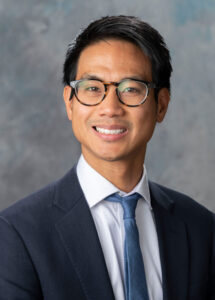
Shane Shucheng Wong, MD
Director of Didactics
As Director of Didactics, I’m passionate about creating a learning environment where residents feel supported and inspired to become lifelong learners. I believe in meeting trainees where they are at, and the concept of scaffolding to help them grow into resilient psychiatrists who are clinically strong and grounded in reflective practice. My goal is to foster curiosity, resilience, and a strong foundation for lifelong growth in psychiatry.
My background includes training in both adult and child & adolescent psychiatry at Massachusetts General Hospital and McLean Hospital, after graduating from Stanford Medical School. I supervise residents in the core child psychiatry rotation, Transitional Age Youth electives, and psychodynamic psychotherapy training. As a clinician educator, I continue to learn every day—both as a parent, and in my clinical and teaching roles at Kaiser Permanente.
Didactics and Education Committee:
The Didactics and Education Committee consists of resident representatives from each postgraduate year, Chief Residents, Program Director, Director of Didactics, and faculty with expertise in medical education. The committee meets quarterly to review resident feedback, assess educational outcomes, and ensure alignment of the didactic curriculum with ACGME core competencies and clinical training requirements. Curricular needs and opportunities for improvement are informed by clinical rotation experiences, evolving training priorities, and resident performance on the Psychiatry Resident In-Training Examination (PRITE). Through ongoing curriculum review and development, the committee plays a key role in supporting continuous program improvement and advocating for a high-quality, responsive educational experience for residents.
Didactics
Our residency program is committed to providing a robust and interdisciplinary educational experience through protected didactic time every Thursday afternoon for all residents. This time is reserved exclusively for academic enrichment and professional development.
Core Features of the Didactic Curriculum:
- Structured Syllabus: A comprehensive, evolving curriculum tailored to each year of training.
- Interdisciplinary Teaching: Didactics are led by a diverse group of clinicians including psychiatrists, psychologists, and other mental health professionals.
- Innovative Topics: Includes sessions on interventional psychiatry, emerging treatments, and cutting-edge research.
- Case-Based Learning: Emphasis on case discussions and consultation-style teaching to bridge theory and practice.
- Resident-Led Learning: Residents organize and lead journal clubs, Morbidity & Mortality (M&M) conferences, and grand rounds, fostering peer-to-peer learning and leadership.
- Resident as Educator Series: Offered through Kaiser Permanente GME, this series empowers residents to develop teaching skills and lead educational sessions.
- Mentorship & Professional Development: Integrated activities such as mentorships sessions, self-assessments, and career planning, to promote career advancement and development professional identity.
- Wellness Curriculum: Dedicated sessions focused on physician well-being, resilience, and self-care.
- Narrative Medicine: Encouraging reflection and empathy through storytelling and literary exploration.
DIDACTIC PROGRAM OVERVIEW
- Protected Didactics: Residents have dedicated educational time every Thursday afternoon for structured learning, case-based discussion, skills practice, reflection and professional development. This protected time reinforces the program’s commitment to resident education across all four years of training.
- Core Didactic Series: Didactics are anchored by a comprehensive set of core didactic series, encompassing:
- Diagnostic Interviewing & Formulation
- Core Psychopathology
- Psychopharmacology
- Psychotherapy
- Child & Adolescent Psychiatry
- Reproductive Psychiatry
- Geriatric Psychiatry
- Addiction Psychiatry
- Consultation-Liaison Psychiatry
- Emergency Psychiatry
- Clinical Neuroscience
- Clinical Neurology
- Community Psychiatry
- Forensic Psychiatry
- Interventional Psychiatry
- Integrative Psychiatry
- Evidence-Based Medicine
- Professionalism & Ethics
- Wellness & Resilience
- Leadership & Advocacy
- Journal Club: Residents build skills in critical appraisal, evidence-based psychiatry, and scholarly discussion through recurring resident-led Journal Club sessions. These sessions help residents interpret emerging literature, apply evidence to clinical practice, and develop confidence presenting academic material to peers and faculty.
- Grand Rounds: Grand Rounds bring residents together with faculty and regional experts to explore timely clinical, scientific, system-based, and professional topics. These sessions broaden residents’ exposure beyond the core curriculum and connect local learning to wider developments in psychiatry and health care.
- Board Review: Board preparation is integrated longitudinally into didactics, with emphasis on psychopathology, formulation and treatment.
| Annual Didactic Roadmap by PGY | ||
| CURRICULUM AT A GLANCE
Residents move from foundational assessment and treatment, towards specialty practice, advanced psychotherapy, scholarship, teaching, and leadership. The curriculum covers core psychiatry topic series from diagnostic formulation to psychopharmacology and psychotherapy, looking across the lifespan and across specialty care, with ongoing emphasis on professional development. Representative sessions below illustrate the learning arc.
|
||
| PROGRESSION BY TRAINING YEAR | ||
| Training year | Primary emphasis | Developmental outcome |
| PGY-1 |
Foundations of psychiatric assessment, diagnosis, safety, and treatment |
Build a systematic framework for interviewing, psychopathology, formulation, acute care, and evidence-based treatment.
|
| PGY-2 |
Broad exposure to specialty and lifespan psychiatry and psychotherapy |
Integrate psychotherapy, consultation-liaison, child/adolescent, geriatric, community, forensic, and neuropsychiatric perspectives.
|
| PGY-3 |
Advanced outpatient care, case formulation, psychopharmacology, and scholarship. |
Manage longitudinal complexity in outpatient care. |
| PGY-4 |
Leadership, teaching, career development, board preparation and transition to practice |
Function as senior clinician-educators prepared to lead teams and teach. |
| PGY-1 | FOUNDATIONS | ||
| Month | Spotlight | Representative sessions |
| July | Transition to residency
Psychiatric interviewing |
Ensuring Personal Safety
Mental Status Exam |
| August | Psychiatric formulation
Acute psychiatric care |
Biopsychosocial model
Managing Agitation |
| September | Risk assessment Medicolegal framework |
Suicide Risk Assessment
Psychiatric Holds |
| October | Psychotic disorders
Evidence-based practice |
Psychosis Core
Antipsychotic Treatments Landmark Studies: CATIE Trial |
| November | Mood disorders
Psychopharmacology |
Bipolar Disorder Core
Mood Stabilizers Landmark Studies: STAR*D, STEP-BD |
| December | Anxiety disorders
Trauma |
Anxiety Disorders
Post-traumatic Stress Disorder |
| January | Psychiatry and the law
Neurological mimics |
Psychiatry and the Law
Capacity Evaluation Autoimmune Encephalitis |
| February | Severe Mental Illness
Community psychiatry |
Clozapine
Long-Acting Injectables |
| March | Addiction disorders
Personality disorders |
Substance Use Disorder Treatment Personality Disorders Overview |
| April | Psychotherapy primer
|
Acceptance and Commitment Therapy
Cognitive Behavioral Therapy Dialectical Behavioral Therapy |
| May | Clinical neuroscience Neuropsychology
|
Neurobiology of Schizophrenia Neuropsychological Testing |
| June | Scholarship | Scholarly Activity |
| PGY-2 | EXPANDING SKILLS & SPECIALTY CARE | ||
| Month | Spotlight | Representative sessions |
| July | Specialty-care orientation | Child & Adolescent Series Overview
Consult Liaison Series Overview Psychotherapy Clinic Overview |
| August | Child & Adolescent Psychiatry | Development in Child Psychiatry
ADHD Across the Lifespan |
| September | Consultation-Liaison Psychiatry | Advanced Delirium Management Epilepsy and Anti-Epileptic Drugs |
| October | Structured Psychotherapy
|
CBT Case Formulation
Motivational Inteviewing Workshop Dialectical Behavioral Therapy |
| November | Geriatric Psychiatry
|
Behavioral & Psychological Symptoms of Dementia
|
| December | Forensic Psychiatry | Introduction to Civil Mental Health Laws |
| January | Community Psychiatry | Social Determinants of Health
History of Psychiatry |
| February |
Interventional Psychiatry
|
Electroconvulsive Therapy
TMS: Indications, referrals, and related neurobiology |
| March | Suicide and Risk Prevention | Suicide and Resiliency Workshop |
| April | Clinical Neuropsychiatry | Autism & Intellectual Disability
Neurobiology of Antidepressants |
| May | Psychodynamic Psychotherapy | Psychodynamic Foundations Series |
| June | Clinic transition | Outpatient Clinic Orientation |
| PGY-3 | EXPANDING SKILLS & SPECIALTY CARE | ||
| Month | Spotlight | Representative sessions |
| July | Advanced psychopharmacology | Treatment-Resistant Depression
Deprescribing |
| August | Complex treatment and formulation | BPD and NPD Treatments |
| September | Occupational health in psychiatry | Occupational Medicine & Disability
Treatment Augmentation Strategies |
| October | Reproductive Psychiatry Series |
Postpartum Psychosis Peripartum Psychiatry
|
| November | Psychotherapies | Motivational Interviewing
Acceptance and Commitment Therapy |
| December | Psychotherapy formulation | Psychotherapy Case Conference |
| January | Advanced neuropsychiatry | Adult ASD Evaluations |
| February | Outpatient interventional psychiatry | Transcranial Magnetic Stimulation
Indications and Theory |
| March | Professional development | Career Panel |
| April | Advanced psychotherapy | Psychotherapy Case Consultation |
| May |
Practice management
|
Outpatient Panel Transition Planning |
| June | Junior-attending roles and leadership transition | Clinician-Educator Workshop
|
| PGY-4 | LEADERSHIP, TEACHING & CAREER DEVELOPMENT | ||
| Month | Spotlight | Representative sessions |
| July | Stewardship of the learning environment as senior residents | Senior Resident-Educators Series |
| August | Career development | Career Series
CV Workshop |
| September | Board preparation | Board Review Series |
| October | Clinical teaching | Residents as Educators Series |
| November | Psychotherapy consultation | Psychotherapy case consultation |
| December | Curriculum co-design | Curriculum Series on Wellness |
| January | Teaching series | Teaching Integrative Medicine |
| February | Outpatient interventional psychiatry | Transcranial Magnetic Stimulation
Indications and Theory |
| March | Professional development | Career Panel |
| April | Advanced psychotherapy | Psychotherapy Case Consultation |
| May |
Practice management
|
Outpatient Panel Transition Planning |
| June | Junior-attending roles and leadership transition | Clinician-Educator Workshop
|
Educational Resources:
Access to KP Clinical Library: Through KP’s Clinical Library, residents have free access to a host of online resources, including UpToDate, NatMedPro, Board Vitals, DSM-5 TR, Stahl’s, textbooks on Geriatric Psychiatry, Hospital Psychiatry, Clinical Neurology, and more. Academic journals and research articles are easily accessible through KP Clinical Library’s various databases, and if not available, can be specifically requested via the “Ask the Librarian” feature.
Conference Reimbursement: Residents can be reimbursed up to $3000 each academic year for conferences expenses, such as conference registration, transportation, accommodation, and meals.
Board Exam & Board Preparation Support
As part of Kaiser Permanente Northern California’s resident benefits package, psychiatry residents receive financial support to help with board certification costs. This includes reimbursement for Board Examination fees and board preparation resources:
- Board Exam Fee Reimbursement: Up to $1,500 (one-time) to help cover the cost of your board certification exam application, with the reimbursement request and receipt required by May 31 of your graduation year. Fellows pursuing additional board certifications may be eligible for an additional $1,500
- Board Preparation Support: Up to $1,500 (one-time) reimbursement for a board prep course of your choice. Psychiatry residents also have access to the NEJM Knowledge+ board preparation course tailored for Adult Psychiatry.
- USMLE/COMLEX Step 3: Up to $925 reimbursement for Step 3 or COMLEX Level 3 exam fees if taken within the first 15 months of training.
These benefits are part of Kaiser Permanente’s overall commitment to supporting resident education and professional development.
Board Preparation Curriculum:
Residents receive longitudinal board preparation support through a structured and comprehensive didactic curriculum throughout their training. PGY-3 and PGY-4 residents participate in a dedicated board preparation curriculum embedded within protected didactic time, with sessions led by faculty psychiatrists representing general adult, child and adolescent, and geriatric psychiatry subspecialties. Residents across all postgraduate years also participate in monthly review sessions focused on preparation for the Psychiatry Resident In-Training Examination (PRITE), utilizing interactive, evidence-informed educational strategies to reinforce core psychiatric knowledge and test-taking skills.